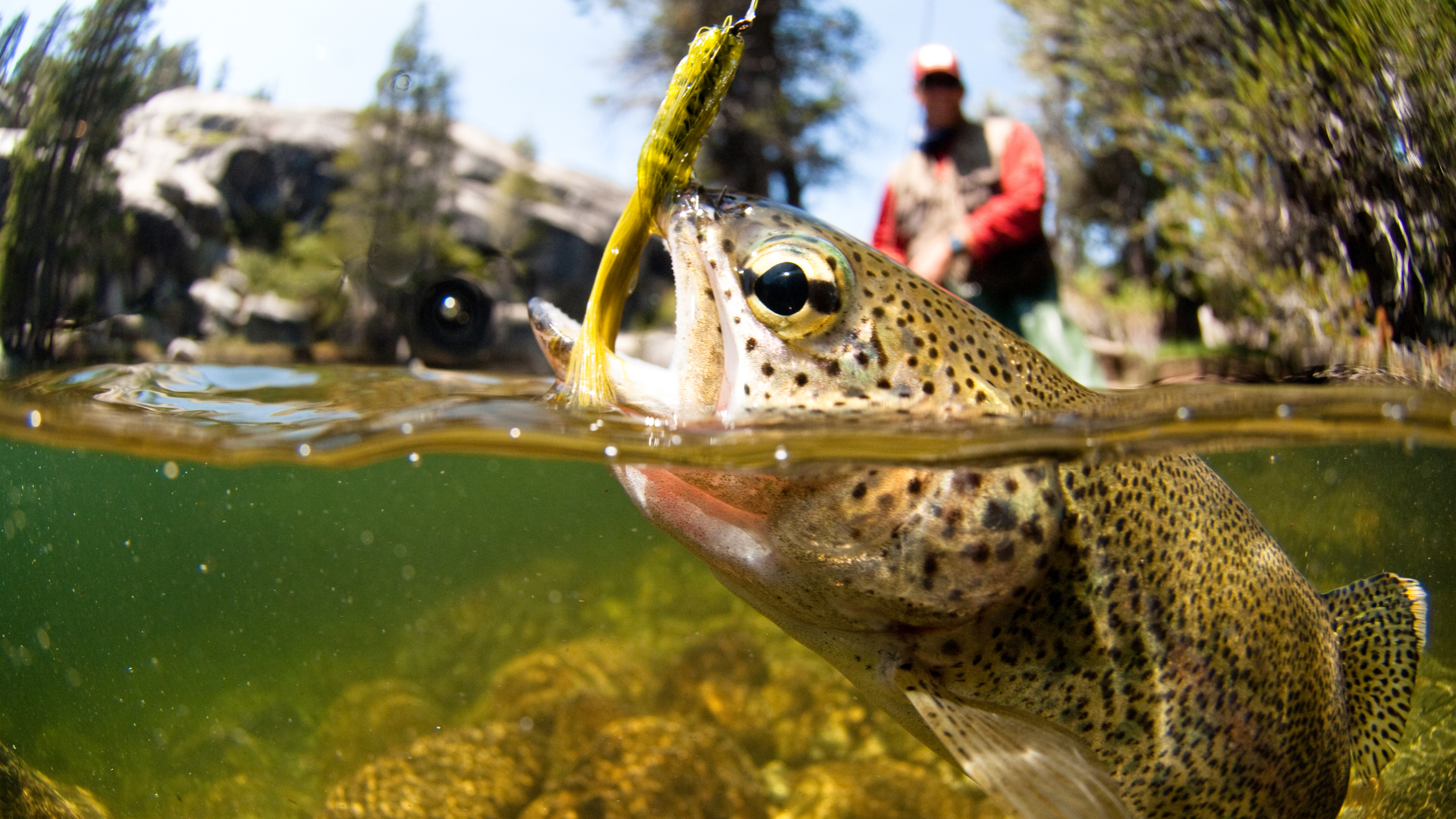
In Pardee Fishing, rainbow trout is the number one attraction. The lake is planted heavily, including some lunkers. There are also large holdover and native trout. Catches in the 3 to 5 pound class are common with trophies taken ranging up to 10 pounds. Trout actions begins on opening day in February. The marina area is heavily fished by both trout trollers and from shore. Trolling is also good by the dam, in the south arm, up in the narrows and even along the shorelines (in colder months).
Shore anglers use nightcrawlers (inflated) or salmon eggs (floated with marshmallows), or cast Kastmasters, Phoebes, Krocodiles, Rooster Tails, Mepps, etc. Lures seem to work best early and late in the day. Locals recommend a a#8 hook, 30 inch leader (4 pound test) and a 1/4 to 1/2 ounce sliding sinker rig for bait angling.
A long leader is also recommended for trolling with leadcore line because the water is so clear. Boat trollers hit with Needlefish, Kokanee King, etc. near the surface in spring and down deeper as surface temperatures rise. When the lake first opens, trollers start at about 10 feet down. By mid-March the depth changes to about 15 feet. During the heat of the summer the best depth is usually around 35 to 40 feet.
Leadcore trolling is still more popular at Pardee fishing than downrigging maybe because the fish never go down really deep, and also because there are shallow spots and sunken islands that can play havoc with downrigger weights and cables. The standard of Pardee regulars is Sunset Line Company’s 15 pound test leadcore line.
Most put it on a Penn levelwind reel. At the trolling speed setting of most outboard motors, each color of this leadcore line will put the terminal rig down about 5 feet. So during summer, trollers are about 7 or 8 colors. The slowest trolling speed that still imparts good line action is usually the best. Troll slightly above the desired depth, never below it.
Pardee is one of the most consistent producers of Kokanee in California. More than 200,000 Kokanee fry are air-drop planted each year. Most Kokanee taken by anglers are three years old and run 11 to 12 inches, but 15 inchers are possible. Kokanee are excellent eating and hard fighting. They are most often caught by trout trollers.
In late April through June, about half the total catch is Kokanee. Kokanee are in schools, so repeat a productive troll. Shore anglers work Pardee fishing at night from the Marina Cove and the other shore angling spot, Woodpile Gulch. Night boat fishing is not permitted.
Black bass fishing at Pardee (fishing) is not really that popular. Maybe its because the super clear water calls for patience and hard work, or maybe because bass anglers head to the neighboring famous bass factory, Lake Amador. Largemouth bass anglers at Pardee concentrate on the coves at the south end of the lake.
Lunker bass have also been taken by anglers fishing live crawdads off the rocky points. Smallmouth bass chasers also work these same points. Crappie and bluegill fishing at Pardee has been inconsistent in recent years, but catfish up to 16 pounds are taken every year. The best concentrations of catfish are in the channel arm, but the cove at the north end of the lake at the marina is also good.
Pardee fishing rewards anglers who treat the lake’s visibility as a tactical tool rather than a nuisance, since the gin-clear water amplifies every shadow and ripple from the shoreline to the narrows. Watching the sun angle, wind chop, and turbulent inflows tells you where rainbow trout and kokanee are likely to hover early in the morning and resurface with depth changes.
Calm glass can let you sneak up on trout by alternating between long casts and gentle drifts that follow the seams and rock humps, because the slightest splash reaches their line of sight. Lake trolling from the mid-lake points is easier when you can see the shimmer of your lure and adjust speed before the fish spook.
Bring a polarized lens to watch the fall of your line and gauge thermocline breaks, since the clarity lets you read how the sandbars transition to weed edges. A quick switch to a smaller profile lure in those well-lit shelves can be the difference between a hookup and a spooked school.
The crystal clarity at Pardee magnifies any grime, so rinse rods, reels, and line after every outing with fresh water and a mild detergent to avoid chlorine or mineral buildup that alters presentations. Pay special attention to drag washers and guides because even a small grit pocket can twist a rainbow trout hookup into a short fight.
Leadcore trolling rigs demand more inspection since the embedded lead can crack or break when braided sand grains wedge between cores, so flex each segment during your cleaning routine. Rotate spools by hand while you floss guides with a cotton swab, then re-lube bearings lightly so the slow-paced lake trolling speed stays smooth.
Store rods horizontally so tip sections do not sag under their own weight and leadcore line retains its precise color sequence. Drop a paper towel on the drag knob to catch excess oil while you test winders, and keep spare leader and sinker components in a sealed bag so lake sunlight does not dull them.
Understanding Pardee’s seasonal calendar starts with February opening for rainbow trout, but the lake quickly shifts as mid-spring runoff drops into stiller conditions. March and April see the kokanee schools rise toward feeding portals, while the surface thermocline climbs and triggers fish to stage near the narrows.
May is prime for shoreline spawning cues so keep an eye on subtle gravel beds and sunnier shelves where trout gather before the full heat sets in. Balances between temperature and oxygen mean the trout often retreat to the edges of deep channels by June, while kokanee hang in vertical columns above their own spawning bands.
When summer settles, leadcore trolling deeper waters at 35 to 40 feet lets you follow the fish without disturbing their post-spawn recovery. Autumn cooling draws bass into the coves again, and the consistent runoff schedule lets you predict when catfish cruising the channel arm will become more visible.
Scanning the contour lines near the narrows reveals the same sunken islands and steep drop-offs that determine where rainbow trout hold throughout the day. Working from the marina toward the dam, note each shelf, rock reef, and debris field so you can replicate productive trolling breaks with lake trolling rigs.
Side-imaging sonar pays dividends by showing vertical walls and submerged timber that can scatter pressure in clear water. Mark the edges of the main channel where the boat wakes ripple, then plan your casts or troll runs to cross those topographic seams at acute angles.
Light colored sand flats connected to deeper trenches attract bait schools once the sun warms the surface, so drop a waypoint and revisit after a wind shift. Pair those maps with physical landmarks such as power poles, cut banks, and the big cove on the south end so you can find the same structure even in low-light conditions.
Competitive anglers at Pardee log morning bite windows, because tournaments that run through spring tighten competition to whoever can read clearing patterns and shifts fastest. Plan backup launch times and gear swaps so you can move from shoreline bait rigs to lake trolling setups quickly without losing the trout frenzy.
Timing your leadcore trolling passes with sunlight that penetrates deep channels helps you place lures near the suspended rainbow trout scouts target on practice days. Pay attention to cove closures and night fishing hours so you are ready to claim the best staging areas as soon as the whistle blows.
Keep a dry logbook with GPS waypoints for each productive run, then review it between heats to stay a few casts ahead of the rest of the field. Respect the tournament’s catch-and-release protocols by handling fish on wet surfaces and keeping their gills submerged while the photographer snaps the release, since visible care earns captain points.
Pardee’s clear water makes wildlife observation effortless, so use that to your advantage by noting eagle perches, ospreys, and heron hunting lines for clues on active baitfish schools. Keep a respectful distance and let birds dictate your drift speed, because their hunting success often mirrors the trout and kokanee activity in the same zone.
Always carry a net or gloves to minimize handling time on rainbow trout and kokanee, and revive fish in the current before releasing them to reduce stress in the thermal layers. Sweep your shorelines and boat decks for stray hooks, monofilament, and trash, and pack out everything you packed in so the wildlife corridor remains pristine.
When paddlers or kayakers share the coves, slow to idle speed near shore to avoid wakes that could spook lurking bass and catfish. Report any injured animals to the ranger station and respect posted closures, because a healthy ecosystem supports the steady Pardee fishing reputation that brings everyone back.
Planning a multi-lake trip or exploring more Gold Country fishing? Check out these resources:

Welcome to The Fishing Advice – your complete fishing guide for beginners and seasoned anglers alike.
The Fishing Advice is your no-nonsense, fishing news and information website. We deliver the definitive fishing material straight from the experts.
Contact us: contact@thefishingadvice.com